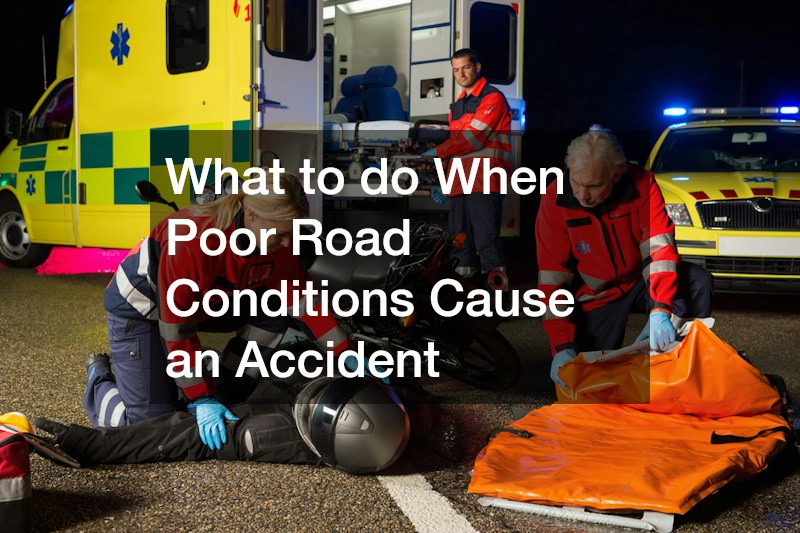
Hitting an unmarked crater-sized pothole at highway speed, hydroplaning across an improperly drained curve, or losing traction on a crumbling shoulder edge can turn an ordinary commute into a terrifying collision within seconds. Unlike a straightforward rear-end fender bender where another motorist is clearly at fault, crashes triggered by hazardous road surfaces leave many drivers feeling shaken, confused, and unsure where to turn next. When no other driver directly strikes your bumper, it is easy to assume you will automatically be blamed for losing control or forced to absorb steep repair and medical bills on your own.
In reality, the entities responsible for designing, building, and maintaining roadways—whether municipal public works departments, state transportation agencies, road construction firms, or private commercial property owners—have a legal duty to keep driving surfaces reasonably safe and warn motorists of known hazards. However, proving that a dangerous road surface caused your crash requires fast, methodical action. Road crews frequently patch potholes or reposition missing warning signs within days of a serious collision, erasing critical physical evidence before an investigation even begins.
This step-by-step guide walks through everything you need to do immediately after a road-hazard crash, from securing your physical safety and preserving perishable scene evidence to navigating insurance claims, traffic citations, and strict legal filing deadlines.
Securing the Scene and Protecting Your Physical Safety Immediately

Moving Out of Active Traffic and Alerting Emergency Responders
The first moments after any crash are disorienting, especially when a sudden wheel impact or loss of traction sends your vehicle spinning across lanes or into a guardrail. Your top priority is preventing a secondary collision—because oncoming drivers approaching the exact same stretch of damaged pavement face the exact same hazard you just hit.
Take these immediate safety steps as soon as your vehicle comes to a stop:
- Activate your hazard flashers right away so approaching traffic sees your disabled vehicle from a distance.
- Check yourself and all passengers for acute injuries before attempting to move or unbuckle.
- Steer your vehicle onto a wide right shoulder, breakdown lane, or nearby parking lot if the car is drivable and moving it does not pose a safety risk. If a bent rim, blown tire, or broken suspension arm leaves the vehicle stranded in an active lane, exit carefully on the side away from traffic and move behind a guardrail or up an embankment.
- Call 911 immediately, even if vehicle damage appears moderate. Having police and paramedics respond creates an official, timestamped record of the collision, road surface conditions, and weather at the exact moment of impact.
Obtaining Prompt Medical Evaluation Even If You Feel Fine at First
When your vehicle slams into a deep pavement drop-off or slides abruptly into a barrier, your body absorbs violent rotational and vertical forces—even if airbags do not deploy. In the immediate aftermath, surging adrenaline and endorphins routinely mask neck stiffness, lower-back strain, concussions, and joint inflammation for 24 to 72 hours.
Never brush off soreness or wait weeks hoping aches will disappear on their own. Schedule a comprehensive evaluation with an emergency physician, urgent care clinic, or a qualified car accident chiropractor within the first two to three days after the crash. Prompt medical documentation establishes a direct, indisputable timeline linking your physical trauma to the roadway incident, while early conservative care prevents minor soft-tissue sprains from developing into chronic mobility limitations.
Tracking Symptoms and Treatment Notes From Day One
Recovery after a jarring collision often unfolds gradually across weeks of diagnostic imaging, physical therapy, and follow-up visits. Starting a dedicated recovery journal on the day of the accident helps both your doctors and your legal team understand the full scope of how the crash affects your daily life:
- Record daily pain levels, headaches, dizziness, numbness, or sleep disturbances in plain language.
- Save copies of every emergency room discharge summary, imaging report, prescription receipt, and physical therapy treatment plan.
- Track missed workdays, reduced shift hours, and everyday household tasks you can no longer perform comfortably, as thorough documentation strengthens any personal injury claim arising from the collision.
Documenting the Road Hazard Before Conditions Change
Capturing Wide-Angle and Close-Up Photos With Scale References
Physical evidence at a road-hazard crash site is uniquely fragile. Rainstorms wash away loose gravel and mud runoff, traffic scatters broken debris, and municipal maintenance crews frequently fill deep potholes within 48 hours once a police report flags a dangerous roadway defect. If you are physically able to move safely outside of traffic—or if an uninjured passenger or friend can assist—use your smartphone to document the scene thoroughly before leaving.
Capture both broad context shots and detailed close-ups from multiple angles:
- Approach sightlines: Walk back along the shoulder (facing oncoming traffic safely from behind a barrier) and take wide photos showing what a driver sees 100 to 200 feet before reaching the hazard, capturing blind curves, hill crests, shadows, or missing warning signs.
- Close-up defect measurements: Photograph potholes, buckled concrete slabs, missing manhole covers, or abrupt pavement edge drop-offs up close. Place an everyday reference object—such as a shoe, water bottle, ruler, or coin—beside or inside the defect so viewers can clearly judge its depth and width.
- Drainage and surface conditions: Photograph standing water pools, clogged storm grates, oil slicks, or loose gravel spread across the travel lane.
- Vehicle and tire damage: Take clear photos of bent wheels, sidewall tire blowouts, scraped undercarriage components, deployed airbags, and skid or gouge marks leading directly from the road defect to your vehicle’s final resting position.
Recording Police Report Details, Witness Contacts, and Dashcam Footage
When the investigating officer arrives, calmly walk them over to the exact pavement defect, missing signage, or drainage hazard that triggered the crash, and ask that the condition be noted explicitly in the official accident report. Write down the officer’s name, badge number, police department, and incident report number before leaving the scene.
Look around for neutral eyewitnesses—including nearby pedestrians, shop employees, or other motorists who had to swerve around the same road hazard—and ask for their names, phone numbers, and brief statements. If your vehicle is equipped with a dashcam, immediately lock or export the video file so continuous loop recording does not overwrite crucial footage of your speed, lane position, and the sudden impact with the road surface.
Identifying Whether a Construction Crew or Commercial Property Owner Maintained the Surface
Not every road-hazard crash happens on an aging city street. Active construction zones, utility trench cuts, and commercial entrances present distinct maintenance responsibilities that must be documented right away. For example, unmarked lane-milling drop-offs, loose aggregate, or shifted traffic barrels left behind by paving contractors during overnight resurfacing can easily catch drivers off guard, while deep, unlit craters and crumbling speed bumps in retail entrances maintained by parking lot contractors frequently cause suspension damage and low-speed collisions.
Before departing the area, photograph any nearby construction company signs, equipment logos, utility permit tags, traffic control barricades, or shopping center signage so investigators can identify every private contractor or commercial entity responsible for maintaining that surface.
Understanding Liability Across Public Roads, Work Zones, and Private Properties
Determining When Municipalities or State Agencies Are Responsible for Road Defects
Public roadways are maintained by a patchwork of city public works departments, county road commissions, and state departments of transportation (DOT). While government agencies are not automatically liable every time a pothole forms overnight during a spring freeze-thaw cycle, they can be held legally responsible when negligence in road maintenance or warning creates an unreasonable danger to motorists.
To establish government liability, injured drivers generally must demonstrate the legal concept of “notice”:
- Actual notice: The agency had already received prior complaints, 311 service tickets, maintenance crew reports, or accident records documenting the exact pothole, broken traffic signal, or flooded curve and failed to repair it or post warning signs within a reasonable timeframe.
- Constructive notice: The road defect was so large, severe, or longstanding—such as deep crumbling asphalt or vegetation completely obscuring a stop sign—that the agency should have discovered and corrected it through routine road inspections.
- Active creation of the hazard: Government crews or hired contractors directly created the dangerous condition through improper grading, faulty drainage design, or missing work-zone signage.
Recognizing Private Property and Commercial Maintenance Obligations
When a collision occurs on private access roads, homeowners association (HOA) streets, apartment complexes, or commercial retail lots, standard premises liability rules apply. Private property owners and commercial management companies owe visitors a clear duty to inspect driving surfaces regularly, repair dangerous deterioration promptly, and post visible warnings around temporary hazards.
Liability can also extend to adjacent residential or commercial frontage when improper private construction spills hazards onto a public street. For instance, crumbling edges where private asphalt driveways tie into public roadways—or an unpermitted driveway extension built without proper culvert drainage that channels mud, loose gravel, or freezing sheet-ice directly across travel lanes—can expose negligent property owners to civil responsibility when passing motorists lose control.
Navigating Insurance Claims and Challenging Unfair Traffic Citations

Communicating Carefully With Insurance Adjusters After a Single-Vehicle Crash
Many road-hazard collisions involve only one vehicle striking a pothole, median, or guardrail—a scenario that often triggers immediate skepticism from insurance adjusters trained to assume single-car crashes result from driver distraction or excessive speed. When reporting the accident to your own insurance carrier, stick strictly to calm, objective facts: state the exact time, location, weather, posted speed limit, and specific pavement defect you encountered, and provide copies of your scene photos and police report.
Avoid speculating about speed, guessing at distances, or apologizing during recorded statements, as casual remarks can be used later to assign comparative fault against you. Depending on your policy coverage, collision insurance typically covers vehicle repairs minus your deductible, while Medical Payments (MedPay) or Personal Injury Protection (PIP) helps cover immediate medical bills regardless of fault.
Contesting “Failure to Control” or Speed-Related Tickets Issued at the Scene
Because responding officers arrive after a crash has already occurred, they occasionally issue routine citations such as “failure to maintain control,” “failure to maintain lane,” or “driving too fast for conditions” based solely on where the vehicle ended up—even when an unavoidable pavement collapse or flooded roadway caused the loss of control.
Paying that ticket online simply to put the ordeal behind you enters a formal admission of guilt on your driving record, which insurance companies and opposing attorneys can use to argue that your own negligence caused the crash. Before paying any citation arising from a road-defect accident, consider consulting a traffic violation law firm to contest the ticket alongside an experienced auto accident attorney who can coordinate your driving-record defense with your broader property damage and injury recovery strategy.
Preparing a Legal Claim and Avoiding Critical Filing Deadlines
Acting Quickly Before Strict Government Notice Deadlines Expire
One of the biggest traps awaiting injured motorists in road-condition cases is assuming they have two or three years to file a legal claim. While lawsuits against private drivers or commercial contractors generally follow standard state personal injury statutes of limitations, claims involving cities, counties, state transportation departments, or public transit authorities are governed by strict sovereign immunity and tort-claim statutes.
In many jurisdictions, injured drivers must file a formal written “Notice of Claim” with the proper government clerk or agency within just 30, 60, 90, or 180 days of the accident date—containing exact statutory details about the location, mechanism of injury, and damages sought. Missing that short administrative notice window by even a single day can permanently bar an otherwise valid claim, making prompt action essential.
Organizing Repair Estimates, Medical Bills, and Expert Engineering Reviews
Building a persuasive claim around defective pavement requires assembling clear technical and financial documentation before crucial records disappear. Keep a well-organized digital and physical folder containing:
- Official police crash reports, 911 dispatch logs, and eyewitness contact information
- Timestamped photographs and video of the road defect, lighting, and surrounding signage
Because public agencies and corporate insurers vigorously defend roadway maintenance claims, qualified injury lawyers frequently collaborate with certified accident reconstructionists and civil highway engineers to measure pavement friction, drainage slopes, and work-zone signage compliance against state MUTCD (Manual on Uniform Traffic Control Devices) standards—establishing the technical proof needed to support a strong personal injury case.
Protecting Your Safety and Rights After a Road-Hazard Crash
Being involved in an accident caused by deteriorating pavement, flooded roadways, or poorly marked construction zones is a stressful experience, yet taking calm, organized steps immediately afterward puts you in control of your recovery. Prioritizing physical safety out of active traffic, seeking prompt medical evaluation even when soreness feels mild, capturing detailed photos of the road defect before maintenance crews patch it over, and handling insurance statements and traffic tickets carefully all safeguard both your health and your financial well-being.
Because roadway conditions change rapidly and government notice deadlines move far faster than ordinary insurance claims, documenting every detail early makes all the difference. Save these practical steps in your glovebox or phone notes today so you are prepared to protect yourself and your rights if hazardous road conditions ever catch you off guard.
About the Author
